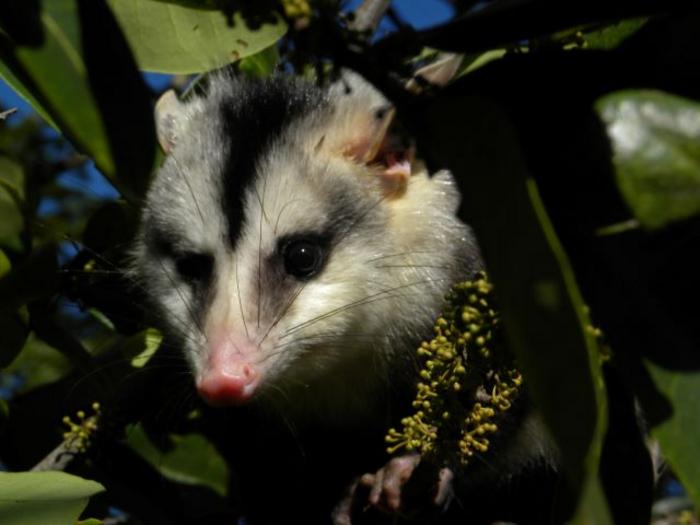
The foreseeable effects of climate change on the Caatinga, the semi-arid shrubland and thorn forest biome in Brazil’s Northeast region, will be catastrophic for most terrestrial mammal species that live there.
A study reported in the journal Global Change Biology by researchers in Brazil affiliated with the State University of Campinas (UNICAMP), the Federal University of (UFPB) and the Federal University of Minas Gerais (UFMG) forecasts species loss for 91.6% of species assemblages in the Caatinga and habitat loss for 87% by 2060.
“This is the best-case scenario, which assumes humanity keeps the promises made in the Paris Agreement, cuts greenhouse gas emissions, and slows the pace of global warming forecasted for the decades ahead,” said Mário Ribeiro de Moura, corresponding author of the article and coordinator of the study. He is a researcher at UNICAMP’s Institute of Biology (IB) and is supported by FAPESP.

The researchers cross-tabulated data from the latest projections of future temperatures published by the Intergovernmental Panel on Climate Change (IPCC) with occurrence data for terrestrial mammals in the Caatinga.
They used several statistical models to capture the species’ physiological tolerance of the existing climate and future climate change scenarios.
According to IPCC, the average temperature in South American drylands will rise up to 2.7 °C by 2060, and the dry season will lengthen by as much as 21 consecutive dry days.
Given that animals take thousands or millions of years to adapt to such drastic changes, the models suggest only a few species will find areas with a suitable climate in future, including armadillos, agoutis and deer, all of which are large mammals. Primates will lose habitats, on the other hand.
Small species whose adults weigh less than 1 kg, comprising 54% of the Caatinga’s mammals, will lose most. Twelve species, or 12.8% of the total, will lose their habitats completely by 2060 under the best-case scenario, and 28 (30%) by 2100 under the worst-case scenario.
The hardest-hit rodents and marsupials will include the Agile gracile opossum (Gracilinanus agilis), the Long-tailed climbing mouse (Rhipidomys mastacalis), and the White-spined Atlantic spiny rat (Trinomys albispinus).
“Biotic homogenization [in which previously distinct plant communities become progressively more similar] will occur in 70% of mammal assemblages, with a few generalist species surviving while rarer specialists will lose suitable areas and become locally extinct. This will result in a loss of ecological functions such as seed dispersal, and the ecosystem as a whole will become less resilient,” Moura said.
A previous study by Moura and colleagues also used statistical models and databases to forecast how plants in the Caatinga will be affected by climate change. The findings include homogenization of 40% of plant assemblages, with shrubs and grasses surviving better than trees and other woody species, for example (read more at: agencia.fapesp.br/44876).
Transition zone
Although mammals can change their behavior to escape higher temperatures, cooler times of day may be used by many species at the same time, leading to more competition for resources, and this will also affect their chances of survival, Moura explained.
The eastern portion of the Caatinga, which contains the transition zone to the Atlantic Rainforest biome, will be affected most under all scenarios. More species live there thanks to the higher levels of humidity from the ocean and forest evapotranspiration.
“This is also the part of the Caatinga with the largest cities. Deforestation, poaching and other longstanding practices help make the situation there even more complicated, potentially amplifying the effects of climate change,” Moura said.
In light of all these factors, the article stresses the importance of taking biodiversity forecasts into account in long-term socio-environmental policy and conservation planning.
Besides the project led by Moura, the study was also funded via a research grant awarded to Mathias Mistretta Pires, a professor at IB-UNICAMP and a co-author of the article.
IMAGE CREDIT: Mário R. Moura/UNICAMP
Sign up for the Daily Dose Newsletter and get the morning’s best science news from around the web delivered straight to your inbox? It’s easy like Sunday morning.



Leave a Reply