HAVE YOUR SAY.
Join us in The Bullpen, where the members of the Scientific Inquirer community get to shape the site’s editorial decision making. We’ll be discussing people and companies to profile on the site. On Wednesday, March 22 at 5:30pm EST, join us on Discord and let’s build the best Scientific Inquirer possible.
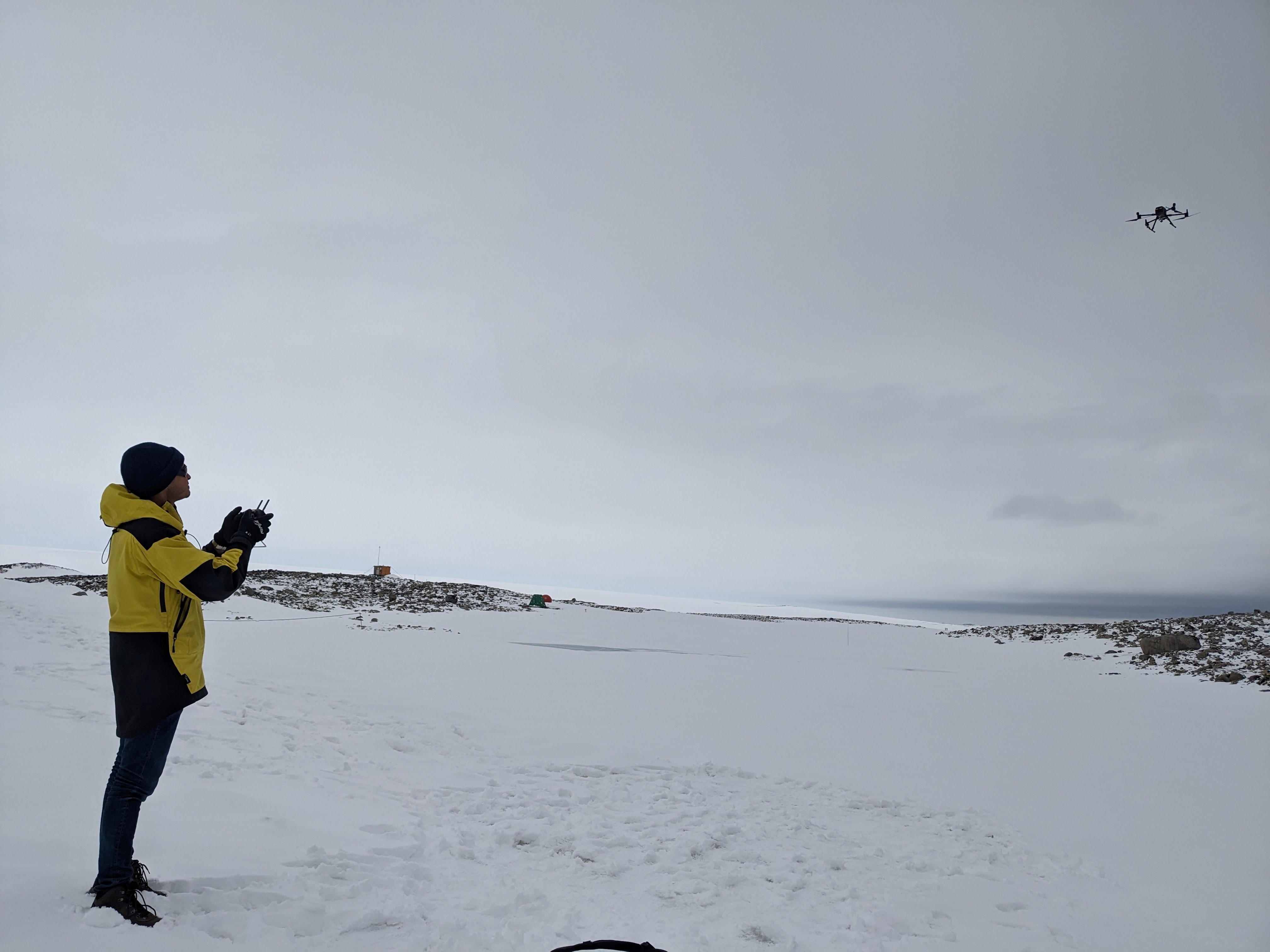
Researchers have been using drones to map large areas of Antarctica this summer in efforts to monitor the effects on vegetation due to climate change with the support of the Federal Government’s Australian Antarctic Division.
The drone-derived imagery is being used by researchers from QUT and Auckland University of Technology – with assistance from University of Wollongong – to evaluate the fragile ecosystem, particularly moss beds, and changes in the extreme environment.
For almost two months, the field team was based in Antarctica, with indications the drones they piloted captured unprecedented high-resolution imagery of vegetation and biodiversity in protected areas.

The vision taken from Antarctic Specially Protected Areas (ASPAs 135 and 136), not far from the scientists’ base settlement of Casey Station, identified areas with moss and lichen not previously picked up by satellite.
QUT Centre for Robotics researcher Dr Juan Sandino, who specialises in mechatronics and automated remote sensing systems, helped develop and deploy the drones, classifying Antarctic vegetation at low altitude.
“Piloting these flights was at times challenging; however all the systems performed well under extreme cold conditions,” he said.
He said working in Antarctica demanded rigorous physical preparation and had additional logistical pressure of ensuring the heavy equipment was operational.
The seven-year $3.57 million project is co-led by QUT Professor Felipe Gonzalez and Auckland University of Technology Professor Barbara Bollard.
The project’s key aims included monitoring the vegetation through smart sensors and artificial intelligence, modelling microclimates, and producing accurate maps of protected areas and other ice-free regions.
“Few plants can survive in Antarctica and mosses are the largest and oldest plants to grow there with beds up to 50 metres wide and plants as old as 500 years,” Professor Bollard said.
“The moss is sensitive to variations of temperature and moisture in Antarctica and is an important indicator of climate change.”
Professor Gonzalez said mapping and monitoring the moss beds over time will help to understand the health of mosses and other vegetation.
The research is conducted as part of Securing Antarctica’s Environmental Future (SAEF), a $36 million research program funded by the Australian Research Council as a special research initiative.
Further drone-derived imagery as well as AI for other Antarctic regions may be used to evaluate the effectiveness of area-based conservation interventions in more parts of the icy continent.
QUT research, published recently in Conservation Biology, presented a case and a research agenda evaluating the conservation impact of Antarctica’s protected areas.
PhD researcher Joanna Burrows and supervisor Professor Kerrie Wilson, who are also part of SAEF, identified a gap in the research regarding the effectiveness of Antarctic Specially Protected Areas (ASPAs).
Ms Burrows said that drones can provide new and more detailed information to evaluate the performance of ASPAs.
“Drones could increase the likelihood of successful data collection by allowing remote and fragile ecosystems to be surveyed with low impact and can mitigate some accessibility issues,” Ms Burrows said.
IMAGE CREDIT: QUT




Leave a Reply