HAVE YOUR SAY.
Join us in The Bullpen, where the members of the Scientific Inquirer community get to shape the site’s editorial decision making. We’ll be discussing people and companies to profile on the site. On Wednesday, November 23 at 5:30pm EST, join us on Discord and let’s build the best Scientific Inquirer possible.
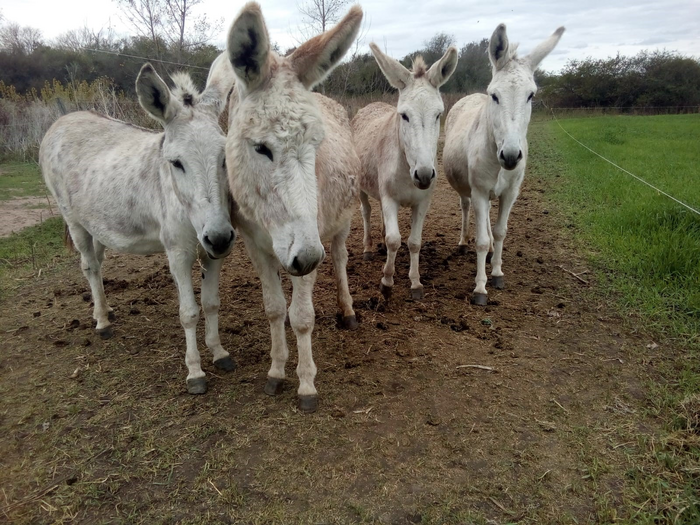
A University of Queensland-led research group has created the world’s first successful donkey embryo using in-vitro fertilisation (IVF), which could save dozens of endangered donkey species.
Creating a viable donkey embryo has been challenging, but UQ’s Dr Andres Gambini, in collaboration with Argentinian and Spanish researchers, made it happen using a specialist IVF process known as intracytoplasmic sperm injection (ICSI).
The world-first donkey embryo, which is from an endangered European breed, is currently frozen in liquid nitrogen while researchers search for a suitable female for implantation.

Dr Gambini said the success opened up the possibility of helping donkeys – and other vulnerable species – by creating a ‘frozen zoo’ or genetic bank of embryos.
“With this new tool to produce embryos in the laboratory, we can help to repopulate a species if we need to,” he said.
“There are many problems associated with inbreeding when trying to increase a species’ population, but this IVF technique means we can essentially combine semen and eggs from donkeys with a different genetic background and create viable embryos.”
Dr Gambini, who worked with National University of Río Cuarto PhD student Ana Flores Bragulat on this project, said donkey populations are more endangered than people realise.
“Seven of the 28 European domestic breeds are in critical status and 20 are endangered, while wild donkey species are also in trouble,” Dr Gambini said.
“The reasons for this include theft, illegal slaughtering, decreasing grazing land and people using them less.
“There are also concerns about wild donkeys around the world being killed for ‘ejiao’, a key ingredient in traditional Chinese remedies produced from collagen in donkeys’ skin.”
Dr Gambini has been working on this project for about three years and has previously worked with horses and zebras.
His team currently has 10 frozen zebra embryos in storage, including clones.
“Throughout my research career, I’ve been exploring assisted reproductive technologies to improve the genetic progress in all sorts of domestic animals,” he said.
“In 2020, we reported the first zebra embryo and now the first donkey embryo – who’s to say what’s next?”
Dr Gambini said donkey embryos were much more difficult to work with, with a success rate of five to 10 per cent, compared to horses which are about 30 per cent.
“I wish I knew why donkey embryos were not produced easily!” he said.
“Each species is completely different and through our research, we’re trying to understand more.
“We hope this research will lead to a more integrated donkey conservation program.
“We also hope to discover how to make IVF processes work for a wide range of endangered species.
“It’s just one weapon in our conservation ass-enal, so to speak.”
Researchers hope to create more viable embryos and find suitable female donkeys for implantation before the breeding season ends next year.
The world-first embryo is currently frozen in a lab in Spain, and was created using donkey semen and an egg from different areas of the country.
IMAGE CREDIT: The University of Queensland



Leave a Reply