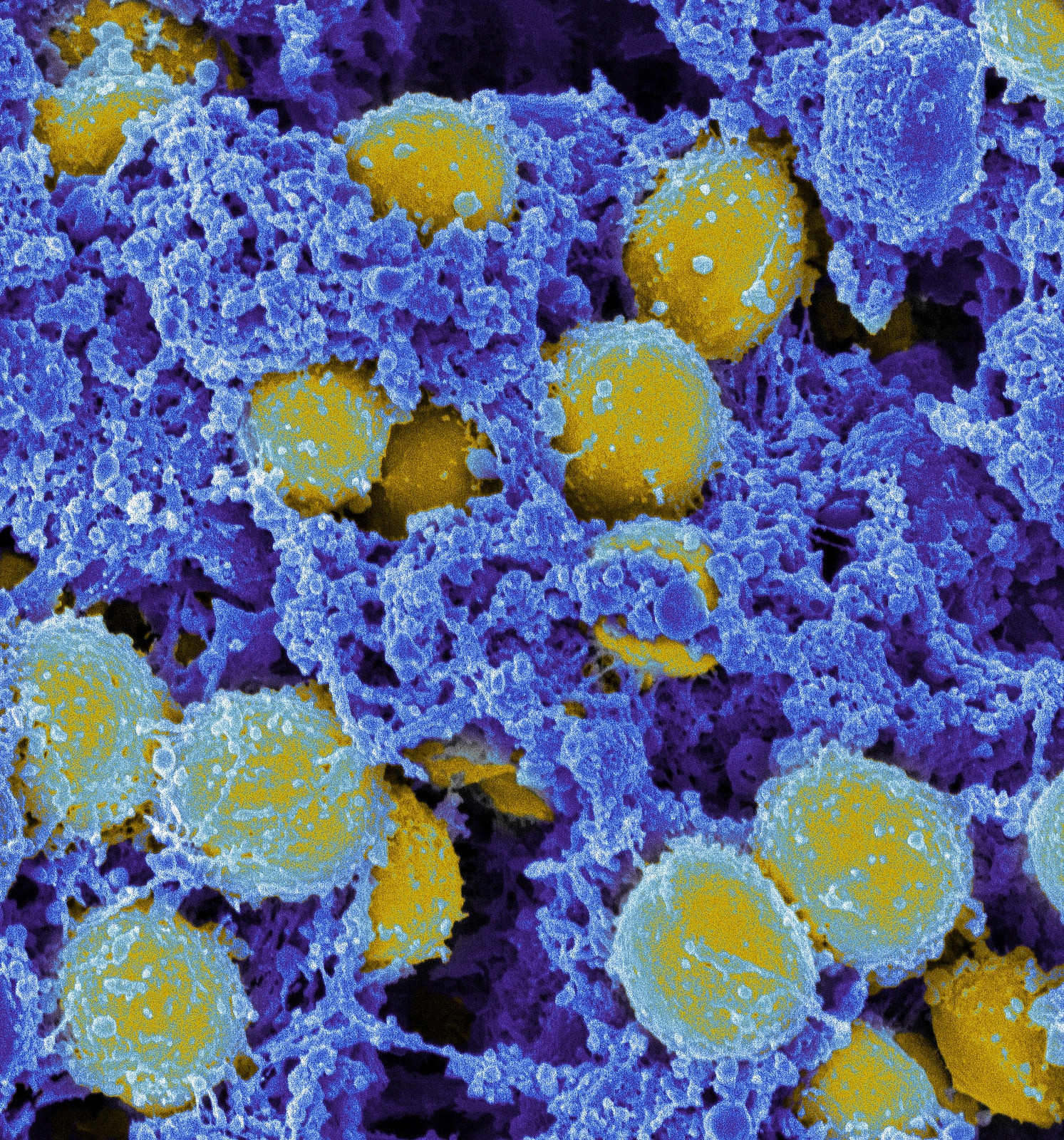
When confronted with an antibiotic, toxic substance, or other source of considerable stress, bacteria are able to activate a defence mechanism using cell-to-cell communication to ‘warn’ unaffected bacteria, which can then anticipate, shield themselves and spread the warning signal.
This mechanism has just been described for the first time by a team of scientists from CNRS and Université de Toulouse III – Paul Sabatier. It paves the way for the development of new, more effective antibiotic treatments that can target this bacterial communication system.
When they perceive a source of stress, bacteria spring into action, inducing changes in the expression of certain genes and their physiological properties to make them less vulnerable to the detected lethal substance. They also produce small ‘alarmone’ proteins on their surface in order to contact and activate random neighbouring bacteria.

Unstressed bacteria can only change state in the presence of a sufficient amount of alarmones. Thus, only a source of stress perceived by sufficient bacteria can trigger propagation of this activation.
The mechanism offers several advantages: it limits the unnecessary use of energy and enables a rapid and coordinated response in the population. Because activation is gradual, it creates diversity in the population over time, thus increasing the bacteria’s chances of survival.
These findings, published on 10 July in Nature Communications, were established using a dozen different families of antibiotics on populations of Streptococcus pneumoniae, the bacteria that causes pneumococcal infections.
IMAGE CREDIT: NIAID




Leave a Reply