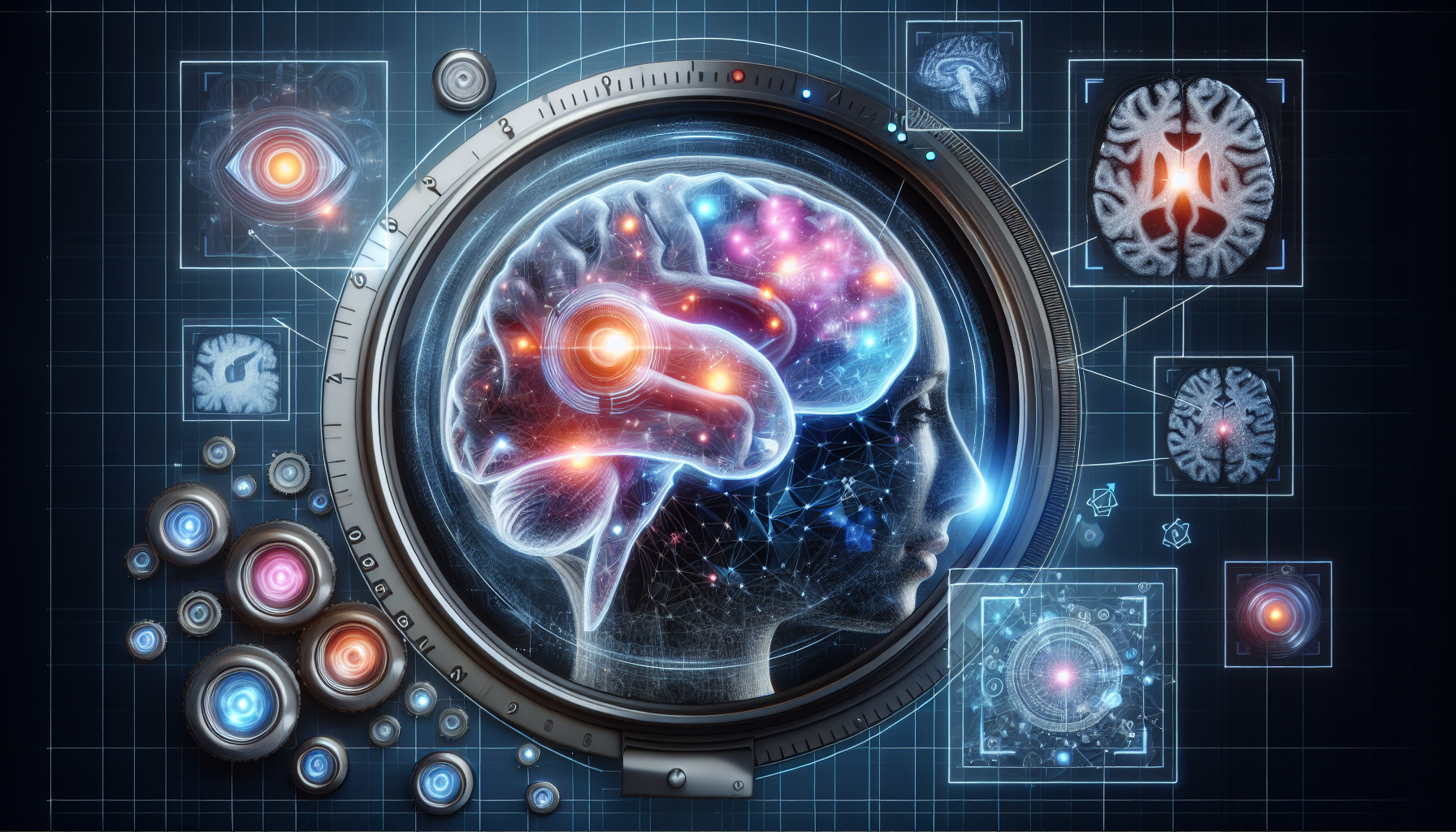
Artificial intelligence (AI) computer programs that process MRI results show differences in how the brains of men and women are organized at a cellular level, a new study shows. These variations were spotted in white matter, tissue primarily located in the human brain’s innermost layer, which fosters communication between regions.
Men and women are known to experience multiple sclerosis, autism spectrum disorder, migraines, and other brain issues at different rates and with varying symptoms. A detailed understanding of how biological sex impacts the brain is therefore viewed as a way to improve diagnostic tools and treatments. However, while brain size, shape, and weight have been explored, researchers have only a partial picture of the brain’s layout at the cellular level.

Led by researchers at NYU Langone Health, the new study used an AI technique called machine learning to analyze thousands of MRI brain scans from 471 men and 560 women. Results revealed that the computer programs could accurately distinguish between biological male and female brains by spotting patterns in structure and complexity that were invisible to the human eye. The findings were validated by three different AI models designed to identify biological sex using their relative strengths in either zeroing in on small portions of white matter or analyzing relationships across larger regions of the brain.
“Our findings provide a clearer picture of how a living, human brain is structured, which may in turn offer new insight into how many psychiatric and neurological disorders develop and why they can present differently in men and women,” said study senior author and neuroradiologist Yvonne Lui, MD.
Sign up for the Daily Dose Newsletter and get every morning’s best science news from around the web delivered straight to your inbox? It’s easy like Sunday morning.
Lui, a professor and vice chair for research in the Department of Radiology at NYU Grossman School of Medicine, notes that previous studies of brain microstructure have largely relied on animal models and human tissue samples. In addition, the validity of some of these past findings has been called into question for relying on statistical analyses of “hand-drawn” regions of interest, meaning researchers needed to make many subjective decisions about the shape, size, and location of the regions they choose. Such choices can potentially skew the results, says Lui.
The new study results, publishing online May 14 in the journal Scientific Reports, avoided that problem by using machine learning to analyze entire groups of images without asking the computer to inspect any specific spot, which helped to remove human biases, the authors say.
For the research, the team started by feeding AI programs existing data examples of brain scans from healthy men and women and also telling the machine programs the biological sex of each brain scan. Since these models were designed to use complex statistical and mathematical methods to get “smarter” over time as they accumulated more data, they eventually “learned” to distinguish biological sex on their own. Importantly, the programs were restricted from using overall brain size and shape to make their determinations, says Lui.
According to the results, all of the models correctly identified the sex of subject scans between 92% and 98% of the time. Several features in particular helped the machines make their determinations, including how easily and in what direction water could move through brain tissue.
“These results highlight the importance of diversity when studying diseases that arise in the human brain,” said study co-lead author Junbo Chen, MS, a doctoral candidate at NYU Tandon School of Engineering.
“If, as has been historically the case, men are used as a standard model for various disorders, researchers may miss out on critical insight,” added study co-lead author Vara Lakshmi Bayanagari, MS, a graduate research assistant at NYU Tandon School of Engineering.
Bayanagari cautions that while the AI tools could report differences in brain-cell organization, they could not reveal which sex was more likely to have which features. She adds that the study classified sex based on genetic information and only included MRIs from cis-gendered men and women.
According to the authors, the team next plans to explore the development of sex-related brain structure differences over time to better understand environmental, hormonal, and social factors that could play a role in these changes.
If you enjoy the content we create and would like to support us, please consider becoming a patron on Patreon! By joining our community, you’ll gain access to exclusive perks such as early access to our latest content, behind-the-scenes updates, and the ability to submit questions and suggest topics for us to cover. Your support will enable us to continue creating high-quality content and reach a wider audience.
Join us on Patreon today and let’s work together to create more amazing content! https://www.patreon.com/ScientificInquirer




Leave a Reply