HAVE YOUR SAY.
Join us in The Bullpen, where the members of the Scientific Inquirer community get to shape the site’s editorial decision making. We’ll be discussing people and companies to profile on the site. On Wednesday, March 8 at 5:30pm EST, join us on Discord and let’s build the best Scientific Inquirer possible.
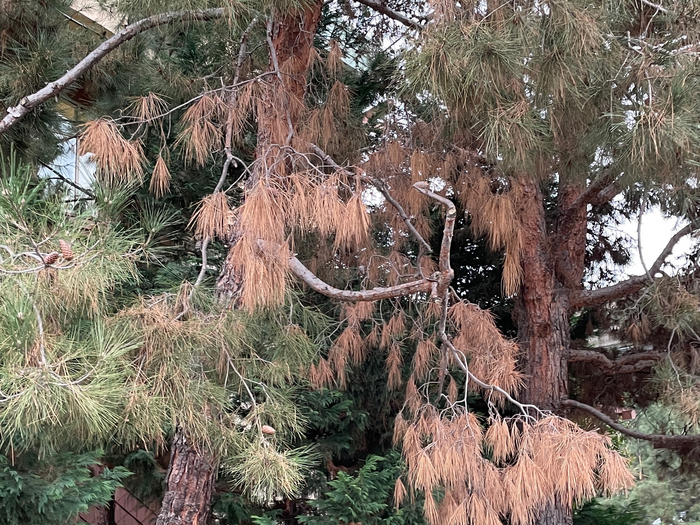
Fungal pathogens that cause die-back in grape, avocado, citrus, nut and other crops has found a new host and is infecting conifer trees causing Pine Ghost Canker in urban forest areas of Southern California.
The canker can be deadly to trees.
Scientists from University of California, Davis, first spotted evidence that the pathogens had moved to pines during a routine examination of trees in Orange County in 2018. Over four years, they found that more than 30 mature pines had been infected in an area of nearly 100 acres, according to a report in the journal Plant Disease.

Akif Eskalen, a professor of Cooperative Extension in the Department of Plant Pathology at UC Davis, suspects drought and other stress conditions brought on by climate change weakened the tree species, making it more susceptible to new threats.
“We have been seeing this on pine trees for the last several years,” he said. “Our common crop pathogens are finding new hosts.”
Pine Ghost Canker – caused by the fungal pathogens Neofusicoccum mediterraneum and Neofusicoccum parvum – usually infects the lower part of a tree’s canopy, killing branches before moving on to the trunks. This dieback in some cases can be deadly.
Points of entry
The pathogens infect a tree by entering through wounds caused by either insects, such as red-haired pine bark beetles, or pruning – meaning trees in managed or landscaped areas could be at risk. Another route is via tiny natural openings known as lenticels that fungi can make their way through, said Marcelo Bustamante, a Ph.D. candidate in Eskalen’s lab who is first author on the paper.
Spores from the fungi can disperse and the higher the prevalence means an increased chance of transmission. Rain, irrigation water and humidity by fog can trigger the right circumstances for the spores to spread, he said.
“The detection of these pathogens in urban forests raises concerns of potential spillover events to other forest and agricultural hosts in Southern California,” Bustamante and others wrote in the report.
Dead branches can indicate a canker. Detecting the fungi is not an emergency but “people should keep an eye on their plants when they see abnormalities,” Eskalen said.
Cankers are localized areas on stems, branches and tree trunks that are usually dead, discolored and sunken. On bark, the spores can look like strings of discolored dots.
The lab has posted a brochure about how to best manage wood canker diseases. Tips include:
- Keep your trees healthy: Proper irrigation and maintenance will keep trees strong.
- Prune dead branches to reduce sources of infestation.
- Avoid unnecessary pruning, perform structural pruning only.
Karina Elfar, Molly Arreguin, Carissa Chiang, Samuel Wells and Karen Alarcon from the Department of Plant Pathology contributed to the paper, as did experts from Disneyland Resort Horticulture Department, State University of New York’s College of Environmental Science and Forestry, UC Irvine and UC Los Angeles.
IMAGE CREDIT: Akif Eskalen, UC Davis




Leave a Reply